+92 303 4713360

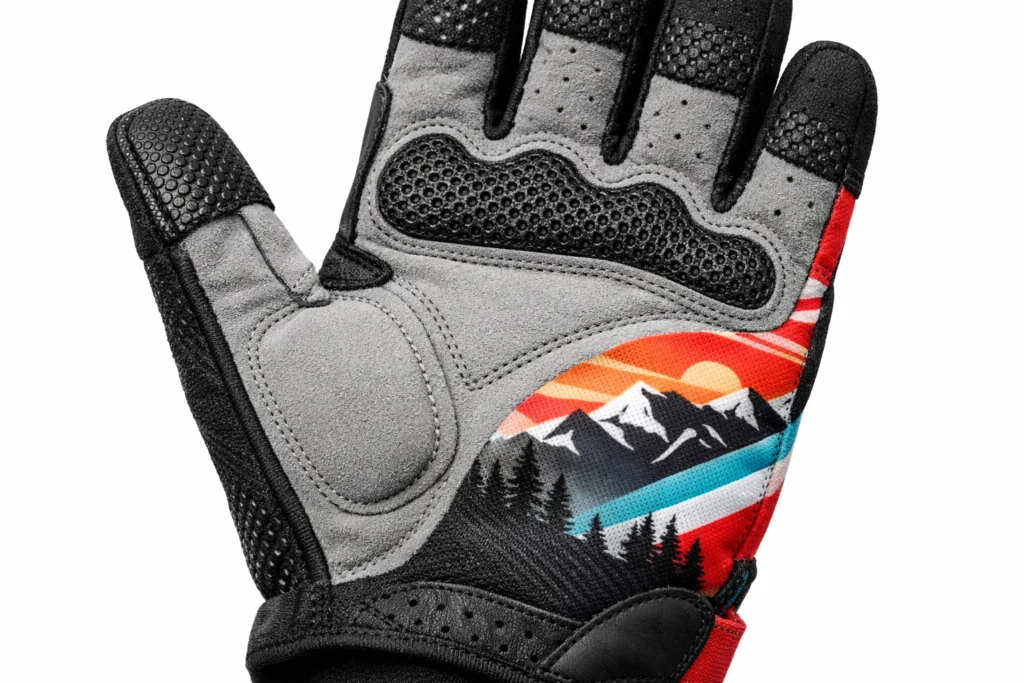
Sublimation printing is a modern decoration technique widely used in sportswear, uniforms, and performance gloves. Unlike traditional printing methods that place ink on top of fabric, sublimation uses heat to convert ink into gas, allowing it to penetrate and bond with fabric fibers.
Because the ink becomes part of the material, sublimated designs do not crack, peel, or fade easily. This makes sublimation especially popular for athletic uniforms, team gloves, and custom sports apparel that require durability and long-term color performance.
Sublimation ink is designed to bond with synthetic, polymer-based fibers. Cotton, being a natural fiber, does not contain polymers that can permanently absorb sublimation ink.
When heat is applied to cotton during sublimation, the ink may transfer temporarily, but it cannot chemically bond with the fibers. As a result, the print lacks durability and color strength.
This limitation is the main reason why sublimation is recommended only for polyester or high-polyester-blend fabrics.
If you attempt to sublimate on cotton fabric, the results are usually disappointing. While the design may look acceptable immediately after pressing, it quickly deteriorates.
Because of these issues, sublimation on cotton is not suitable for professional uniforms, gloves, or commercial production.
Yes, sublimation can work partially on fabrics that contain around 65% polyester. In this case, the sublimation ink bonds only with the polyester fibers, while the cotton fibers remain unaffected.
The final appearance is usually softer and slightly faded, often described as a vintage or muted look. Some brands use this intentionally for casual fashion items.
However, for sports uniforms, sublimated gloves, and performance wear, higher polyester content is strongly recommended to ensure durability and consistent color output.
Choosing the right fabric is the most important factor in successful sublimation printing.
These fabrics are commonly used for sublimated sports uniforms, custom athletic gloves, and professional teamwear where performance and appearance matter.
Many sublimation issues occur due to avoidable mistakes during fabric selection or production.
Avoiding these mistakes ensures consistent, professional-quality results.
Sublimation is widely used in sports and industrial applications where durability and branding are essential.
For uniforms, sublimation allows full-color designs, logos, and numbers without affecting fabric breathability. For gloves, sublimated designs add branding while maintaining flexibility and comfort.
This is why sublimation is commonly chosen for team uniforms, training apparel, and custom sports gloves used in competitive environments.
MIL refers to the thickness of gloves measured in thousandths of an inch. Higher MIL gloves are thicker and provide better protection and durability.
No, vinyl gloves are not heat resistant. They can deform or melt under high temperatures and are not suitable for sublimation or heat-based printing.
Cut-resistant gloves are designed to protect hands from sharp objects and are commonly used in manufacturing, construction, and industrial work.
Sublimation is better for polyester fabrics and full-color designs, while screen printing works well on cotton but may crack or peel over time.
No, sublimation does not block fabric pores because the ink becomes part of the fibers, maintaining breathability.
If you are planning bulk orders for sublimated uniforms or gloves, selecting the correct fabric is essential for quality, durability, and customer satisfaction.
For custom manufacturing, bulk pricing, or product consultation, contact our team at:
Email: info@migloves.com
We help brands and businesses choose the right materials and deliver professional-grade sublimation results for large-scale production.