+92 303 4713360

Custom gloves can be personalized using various printing methods, with sublimation being one of the most popular options. Understanding the differences between sublimation printing and other methods helps manufacturers, brands, and buyers select the best approach for their needs. This guide explains the pros, cons, material compatibility, and applications of each printing method for gloves.
Customizing gloves is important for branding, team uniforms, or promotional purposes. Manufacturers have several printing methods to choose from, each with its advantages and limitations. Selecting the right method depends on the glove material, design complexity, budget, and intended use.
Sublimation printing is a process where heat converts dye into gas, which then permeates the fibers of the glove fabric. This creates a permanent, vibrant design that does not crack or peel. Sublimation works best on polyester or polyester-blend gloves and is ideal for complex designs or full-color prints.
Key benefits include long-lasting colors, high-resolution designs, and minimal impact on glove flexibility.
Screen printing involves pushing ink through a mesh stencil onto the glove surface. It is commonly used for logos, simple graphics, or bold colors. While effective on thicker materials like leather or heavy fabrics, screen printing may crack or fade over time if the glove is stretched frequently.
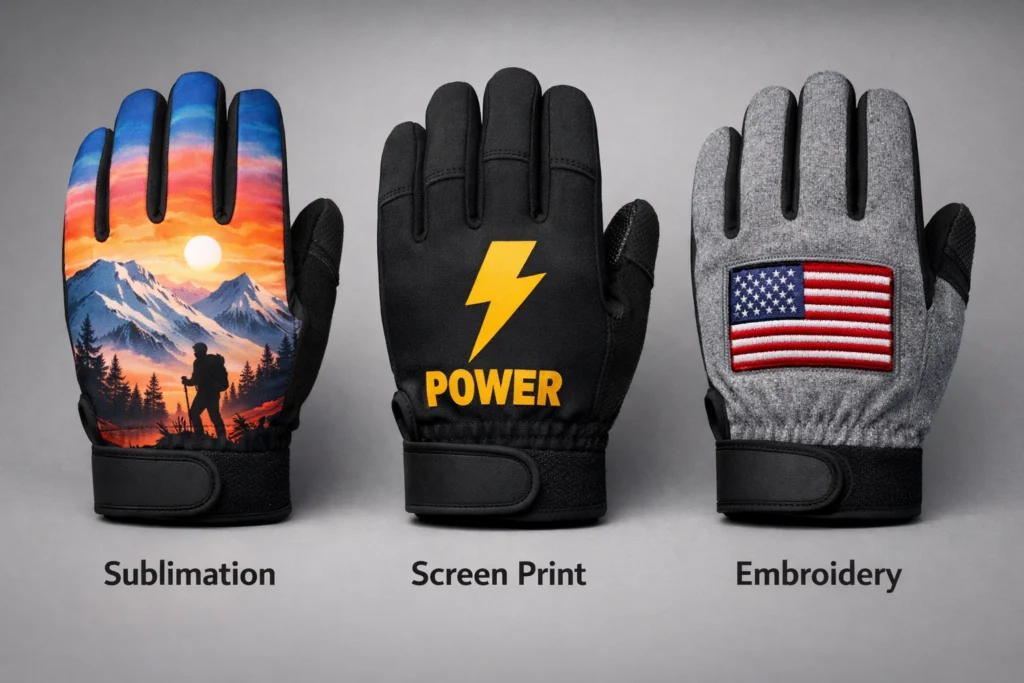
Heat transfer printing applies pre-printed designs onto gloves using heat and pressure. This method works on a variety of materials but may not be as durable as sublimation for polyester fabrics. It is suitable for smaller batches, limited colors, or seasonal designs.
Embroidery uses thread to stitch designs directly onto the glove surface. It provides a premium, tactile look and is extremely durable. However, embroidery is limited in design complexity and may affect glove flexibility or comfort if used on small, thin gloves.
| Printing Method | Best For | Durability | Design Complexity | Material Compatibility |
|---|---|---|---|---|
| Sublimation | Full-color, detailed designs | High | Very Complex | Polyester & Blends |
| Screen Printing | Logos, simple graphics | Medium | Low | Leather, Canvas, Polyester |
| Heat Transfer | Small batches, seasonal designs | Medium | Medium | Most fabrics |
| Embroidery | Premium branding | Very High | Low to Medium | Thick fabrics, leather |
Not all printing methods work with every glove material. Some considerations include:
No, sublimation only works on polyester or polyester-blend fabrics. Cotton requires alternative printing methods.
Sublimation and embroidery provide the longest-lasting designs, while heat transfer may fade faster under frequent use.
Screen printing is best for simple logos or patterns. Detailed, full-color designs are better suited for sublimation.
Yes, some gloves may feature a sublimated base design with embroidered logos or screen-printed accents for durability and aesthetics.
It can be higher cost per unit for small orders, but it provides high-quality, durable results for detailed designs.
For bulk orders or consultation on custom glove printing, contact us at
info@migloves.com.