Industrial Cut-Resistant Gloves: ANSI and EN 388 Standards Bulk Sourcing Guide
Hand lacerations, punctures, and mechanical incisions rank among the most common and costly workplace injuries across manufacturing, metal stamping, glass fabrication, construction, and meat processing industries. According to global occupational safety statistics, over 70% of workplace hand injuries occur when workers are either not wearing hand protection or are equipped with inappropriate, inadequate gloves. Implementing certified industrial cut-resistant gloves dramatically reduces lost-time incidents and workers’ compensation claims. However, commercial procurement officers, safety distributors, and plant managers must navigate complex safety certification standards to select the precise cut level required. This B2B guide analyzes the ANSI/ISEA 105 and EN 388:2016 safety standards, engineered fiber compositions, and contract manufacturing capabilities at Mi-Gloves in Sialkot, Pakistan.
Understanding Safety Standards: ANSI/ISEA 105 vs EN 388
Procuring industrial safety handwear requires understanding the two dominant testing frameworks governing cut resistance:
- ANSI/ISEA 105 (North American Standard): Evaluates cut resistance using the ASTM F2992-15 test method on a TDM-100 machine. It measures the weight (in grams) required for a straight razor blade to cut through the glove material in a 20 mm stroke. ANSI designates 9 discrete cut tiers ranging from A1 (200–499 grams) for light assembly up to A9 (6,000+ grams) for extreme meat processing and heavy metal stamping.
- EN 388:2016 (European Standard): Employs both the Coupe Test (circular rotating blade) and the ISO 13997 TDM test (measured in Newtons). The resulting TDM rating is graded from Level A (2 Newtons / 204 grams) to Level F (30 Newtons / 3,059 grams). EN 388 also evaluates abrasion resistance (1–4), tear resistance (1–4), puncture resistance (1–4), and optional impact protection (P).

ANSI Cut Levels and Industrial Application Matrix
| ANSI Cut Level | Cut Weight Range (Grams) | EN 388:2016 Equivalent | Core Fiber Construction | Primary Industrial Workplace Application |
|---|---|---|---|---|
| ANSI A2 / A3 | 500–1,499 Grams | Level B / Level C | 13/15-Gauge HPPE / Nylon Blend | Automotive assembly, light packaging, small parts handling, electrical work |
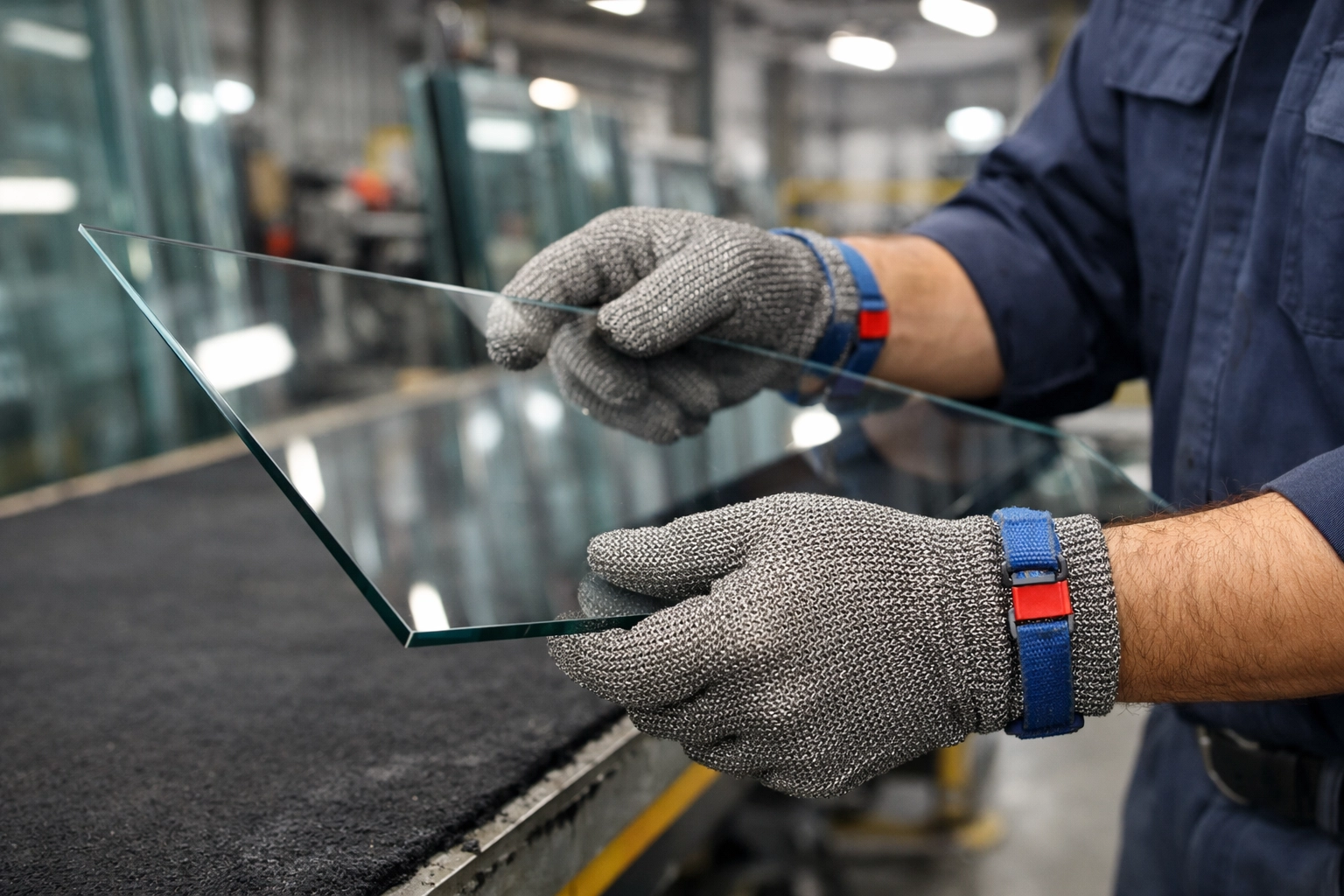
| ANSI A4 / A5 | 1,500–2,999 Grams | Level D / Level E | 13-Gauge HPPE + Mineral Glass Core | Sheet metal fabrication, glass handling, maintenance, HVAC installation |
| ANSI A6 / A7 | 3,000–4,999 Grams | Level F | 10/13-Gauge HPPE + Steel Filament Core | Heavy stamping, recycling sorting, metal recycling, sharp metal edging |
| ANSI A8 / A9 | 5,000–6,000+ Grams | Level F+ (Specialized) | Continuous Stainless Steel Mesh / Tungsten | Commercial meat slaughtering, poultry de-boning, heavy pulp/lumber mills |
Advanced Fiber Science: HPPE, Steel Core, Tungsten, and Kevlar
Achieving extreme cut resistance without sacrificing tactile dexterity requires advanced engineered yarns. Conventional single-polymer yarns fail under sharp shearing forces. At Mi-Gloves, our advanced seamless knitting machines utilize composite core-spun yarns:
- High-Performance Polyethylene (HPPE): Ultra-high-molecular-weight polyethylene fibers deliver up to 15 times the strength of steel on a weight-for-weight basis, remaining lightweight, flexible, and cool to the skin.
- Micro-Filament Stainless Steel Cores: Ultra-fine medical-grade stainless steel filaments wrapped inside HPPE or polyester fibers, preventing sharp blades from slicing through the yarn bundle.
- Aramid (Kevlar / Twaron) Fibers: Provide inherent heat and flame defense alongside cut protection, ideal for metal casting and hot glass handling.
- Polyurethane (PU) and Micro-Foam Nitrile Coatings: Applied across the palm and fingertips to provide high oil grip, mechanical traction, and abrasion longevity.

Wholesale OEM Manufacturing and Factory Compliance from Mi-Gloves
As a certified B2B glove manufacturer in Sialkot, Mi-Gloves supports safety distributors, commercial hardware chains, and industrial PPE brands worldwide:
- Seamless computer-knitted glove shells spanning 10-gauge (heavy-duty), 13-gauge (standard), 15-gauge (high-dexterity), and 18-gauge (ultra-thin bare-hand feel).
- Certified third-party laboratory test reports (SATRA, CTC, or SGS) verifying ANSI and EN 388 ratings.
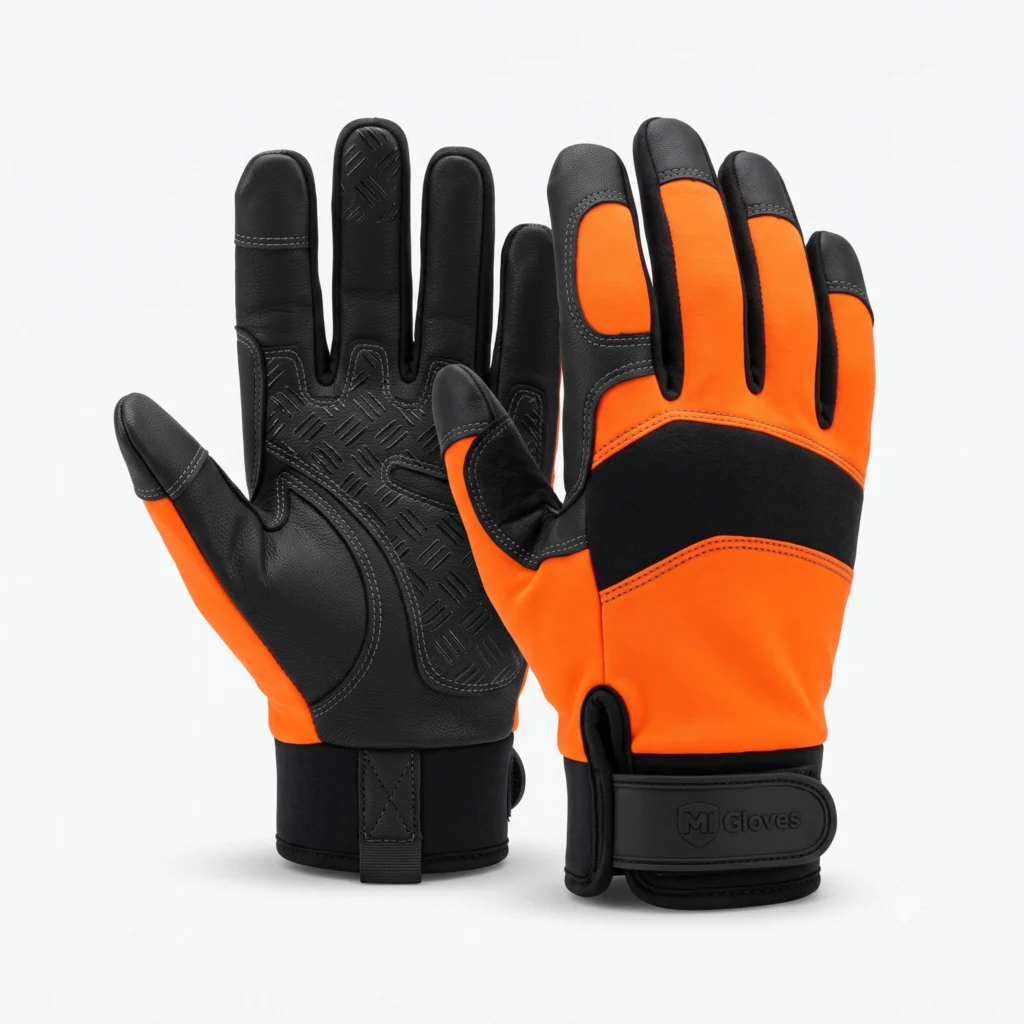
- Custom color-coded cuffs for fast visual cut-level identification on factory floors.
- Private-label branding: screen-printed logos, woven cuff labels, and retail-ready barcoded packaging.
Explore our certified industrial safety glove manufacturing, review our complete range of custom work gloves, and consult our related safety analysis on thermal limits of safety gloves.
Frequently Asked Questions (FAQs)
Are cut-resistant gloves completely puncture-proof and cut-proof?
No industrial glove is 100% cut-proof or puncture-proof. Cut-resistant gloves provide calibrated resistance against slicing and razor shearing forces, significantly reducing the depth and severity of lacerations. They do not protect against high-speed moving serrated blades or hydraulic presses.
What is the difference between 13-gauge and 18-gauge cut gloves?
Gauge refers to the number of knitting stitches per inch. A 13-gauge glove uses thicker yarns for heavier protection, while an 18-gauge glove utilizes ultra-fine yarns, delivering exceptional dexterity and tactile sensitivity for handling tiny screws and delicate electronic components.
Which palm coating performs best in wet or oily machining environments?
Micro-foam nitrile coatings provide the best performance in oily conditions. The micro-porous texture acts like microscopic suction cups, displacing surface oil and delivering exceptional wet grip.
Can cut-resistant industrial gloves be laundered and reused?
Yes. High-quality HPPE and steel-core gloves can be laundered in commercial washing cycles with mild detergent. They must be washed in cool or warm water (under 40°C / 104°F) and air-dried to prevent heat damage to synthetic fibers.
What is the factory minimum order quantity for OEM cut-resistant handwear?
Our standard production MOQ is 500 to 1,000 pairs per style. We offer tiered wholesale volume pricing for annual procurement contracts and distributor stock replenishment.
Can you supply batch test certificates for government and corporate compliance?
Yes. Every export lot comes complete with certified laboratory test certificates confirming ANSI/ISEA 105 and EN 388 compliance, alongside Certificate of Origin documents.