Vinyl gloves are widely used in healthcare, food service, and industrial settings for their affordability and barrier protection. However, many users wonder: “Are vinyl gloves heat resistant?” This article explores the heat tolerance of vinyl gloves, their material properties, limitations, and tips for safe use in environments involving high temperatures.
1. Introduction to Vinyl Gloves
Vinyl gloves are synthetic gloves made from polyvinyl chloride (PVC) and are commonly used as a cost-effective alternative to latex and nitrile gloves. They provide a basic barrier against contamination, chemicals, and dirt, making them popular in food handling, medical examinations, and light industrial tasks.
2. Are Vinyl Gloves Heat Resistant?
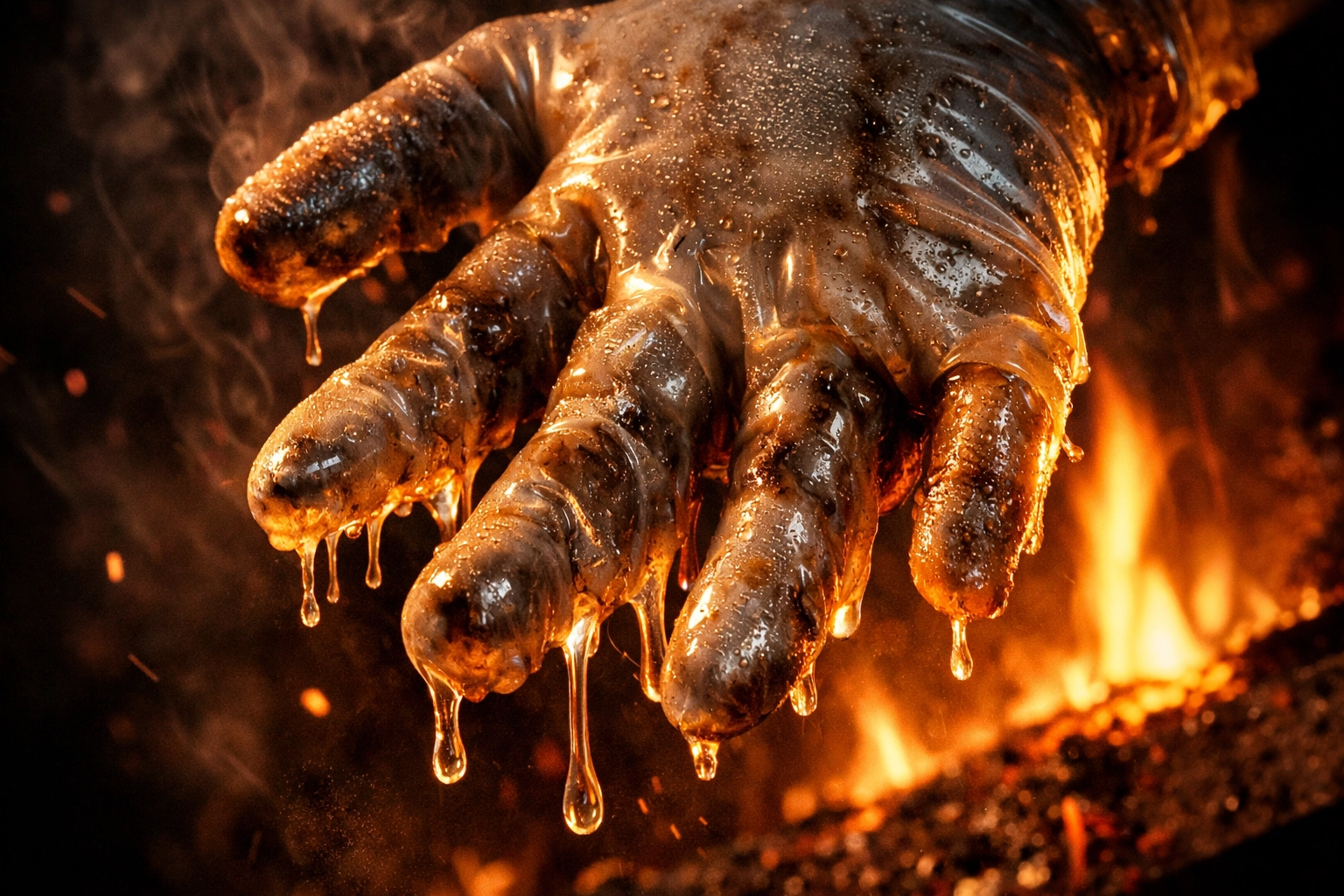
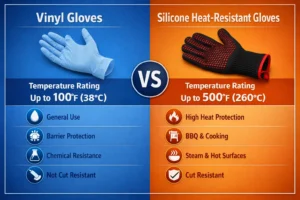
Vinyl gloves are not heat resistant. They are designed for protection against contamination and light chemicals, but exposure to high temperatures can cause melting, deformation, or loss of barrier integrity. Even moderate heat can reduce the durability of vinyl gloves, so they should not be used for handling hot objects or working near open flames.
For tasks involving heat, gloves made of nitrile, Kevlar, or other heat-resistant materials are recommended.
3. Material Properties and Limitations
- Vinyl (PVC) is flexible, lightweight, and inexpensive.
- Not elastic like latex or nitrile; fits loosely on the hand.
- Low resistance to heat and abrasion.
- Effective for food handling, hygiene, and light chemical tasks.
- Not suitable for tasks involving heat, flame, or sharp objects.
4. Safe Usage Guidelines
- Use vinyl gloves for low-risk tasks that do not involve heat or sharp objects.
- Keep away from open flames and hot surfaces.
- Inspect gloves for tears or defects before use.
- Replace gloves after prolonged exposure to chemicals or contamination.
- Store gloves in a cool, dry environment to maintain their integrity.
5. Alternative Heat-Resistant Gloves
If heat protection is required, consider these alternatives:
- Nitrile Gloves: Can tolerate slightly higher temperatures and offer better durability.
- Kevlar or Aramid Gloves: Ideal for high-heat and industrial tasks.
- Leather Gloves: Often used for welding or handling hot equipment.
6. Frequently Asked Questions (FAQs)
Can vinyl gloves withstand boiling water?
No, vinyl gloves will deform or melt when exposed to boiling water or high heat.
Are vinyl gloves safe for kitchen use?
Yes, for food handling at normal temperatures, but not for hot objects like pans or ovens.
Can vinyl gloves be used with chemicals?
They are resistant to mild chemicals, but for strong solvents or oils, nitrile or other chemical-resistant gloves are recommended.
What is the maximum temperature vinyl gloves can tolerate?
Typically, vinyl gloves start to deform at temperatures above 60°C (140°F). Exact tolerance depends on thickness and quality.
Are vinyl gloves reusable?
Vinyl gloves are usually single-use. Reusing them increases the risk of contamination and damage.
7. Related Articles & Internal Links
- What Are Cut Resistant Gloves and How Do They Protect Hands?
- Gloves Required Symbol: Meaning and Safety Guide
- Uniform Gloves: Types and Uses
For bulk orders or consultation on vinyl gloves and other protective gloves, contact us at
info@migloves.com.