Summary
When choosing a printing method for custom gloves, two popular options stand out: sublimation and screen printing. Each method has its own advantages, limitations, and ideal use cases. This guide explains the key differences between sublimation and screen printing for gloves, helping brands, teams, and bulk buyers decide which method is best for durability, design quality, and long-term performance.
1. Introduction to Glove Printing Methods
Custom gloves are widely used in sports, fitness, industrial, and promotional markets. Branding, logos, and design elements play an important role in how gloves look and perform. Choosing the right printing method directly affects durability, appearance, and overall product quality.
Two of the most commonly used decoration techniques are sublimation printing and screen printing. Understanding how each works helps buyers and manufacturers make informed decisions for long-term value.
2. What Is Sublimation Printing?
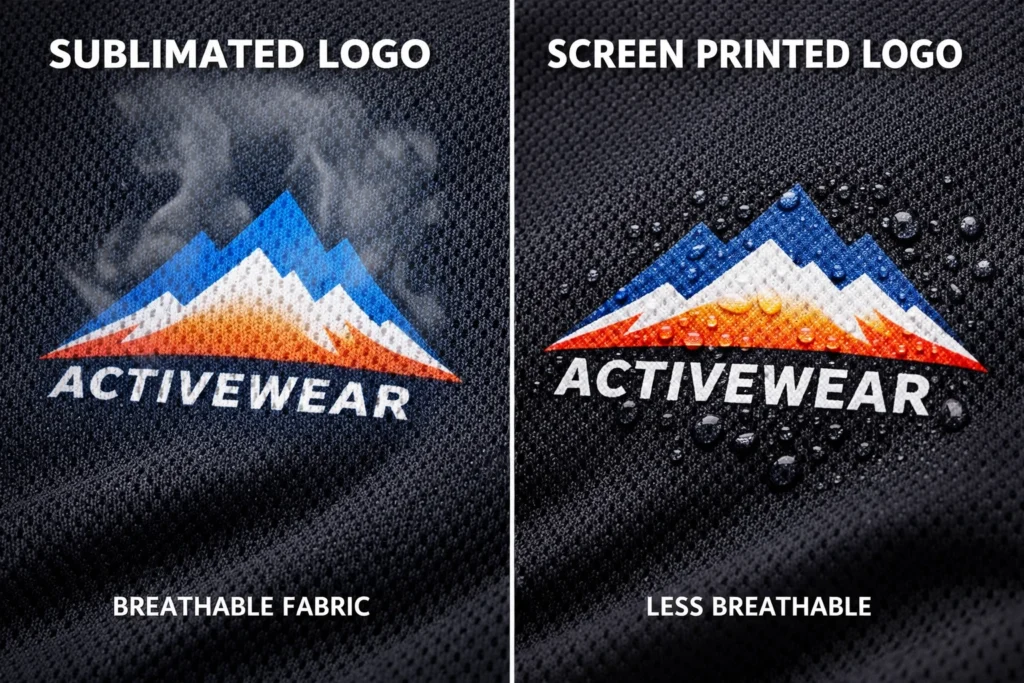
Sublimation printing is a heat-based process where special ink turns into gas and bonds directly with synthetic fabric fibers. Instead of sitting on top of the fabric, the ink becomes part of the material.
This method is widely used for performance apparel, sports uniforms, and custom gloves made from polyester or synthetic blends.
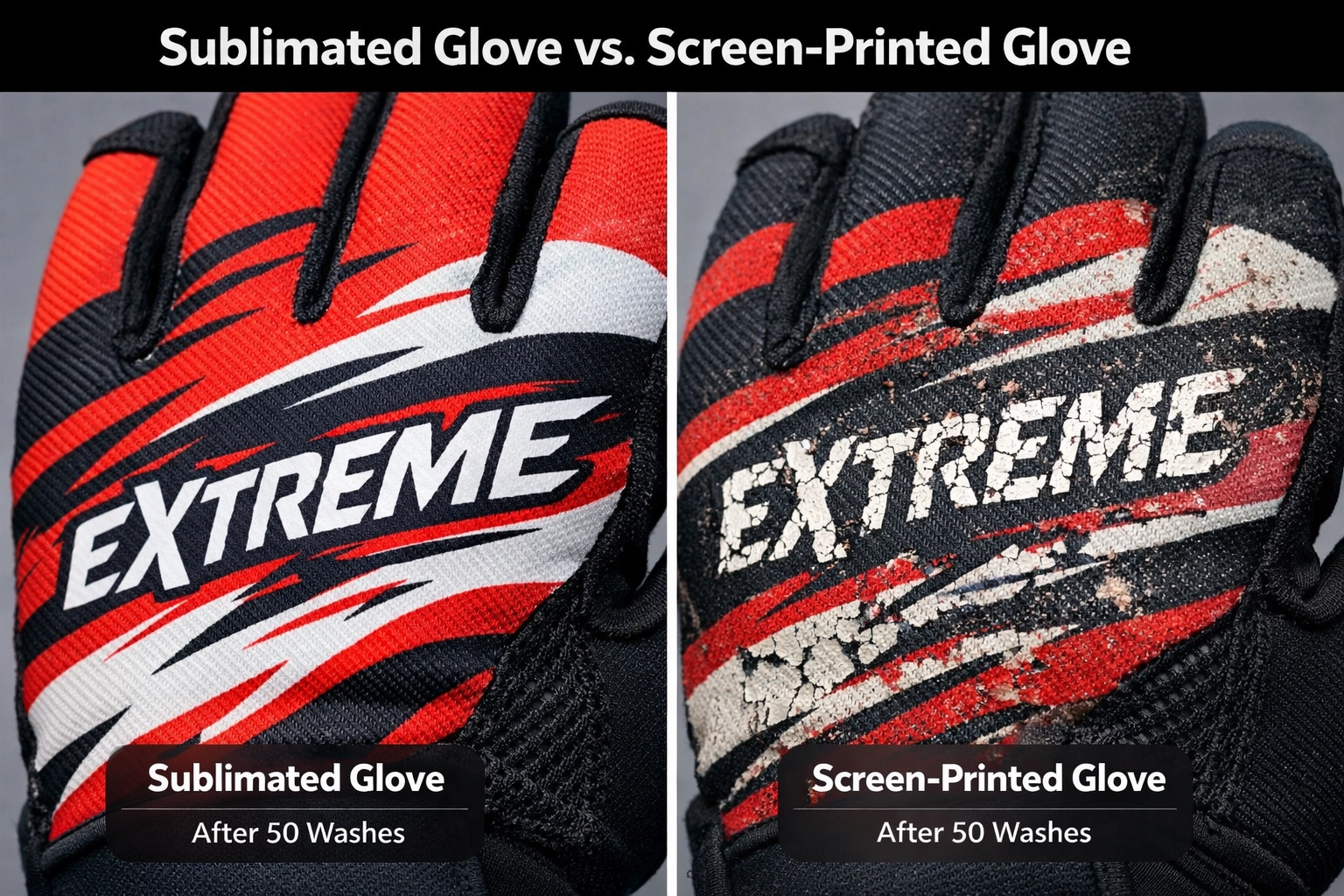
Because the ink integrates into the fabric, sublimated designs do not crack, peel, or add extra thickness to the glove material.
3. What Is Screen Printing?
Screen printing is a traditional method where ink is pushed through a mesh screen onto the surface of the fabric. The ink forms a layer on top of the material.
This technique is commonly used on cotton and cotton-blend fabrics. It is popular for simple logos, text, and limited-color designs.
While screen printing can produce bold colors, the ink layer can affect fabric flexibility and may crack or fade over time with repeated washing and use.
4. Durability Comparison
Durability is one of the most important factors when choosing between sublimation and screen printing for gloves.
- Sublimation: Extremely durable because the ink becomes part of the fabric. Designs will not peel or crack.
- Screen Printing: Ink sits on the surface and may wear off, especially on flexible glove materials.
For gloves that experience frequent movement, friction, and washing, sublimation generally offers superior long-term durability.
5. Design Quality and Color Performance
Sublimation allows for full-color, high-resolution designs with smooth color transitions. Complex patterns, gradients, and all-over prints are easy to achieve.
Screen printing is better suited for simple, solid-color designs. Each color requires a separate screen, which can limit design complexity and increase production time.
For brands that want detailed graphics and modern aesthetics, sublimation provides more creative freedom.
6. Fabric Compatibility
Fabric type plays a major role in determining which method is suitable.
- Sublimation: Works best on polyester and high-polyester blends.
- Screen Printing: Works well on cotton and cotton-blend fabrics.
For performance gloves made with synthetic materials, sublimation is usually the preferred option. For basic cotton gloves, screen printing may be more appropriate.
7. Cost and Bulk Order Considerations
Cost structure differs between the two methods.
Screen printing can be cost-effective for large quantities of simple designs with limited colors. However, setup costs increase with each additional color.
Sublimation has minimal setup for complex designs and is ideal for full-color or customized gloves. For private-label brands and teams, sublimation often provides better value for modern, design-heavy products.
8. Best Use Cases for Each Method
Both methods have their place depending on the product type and market.
- Sublimation is best for: Sports gloves, performance gloves, full-color branding, and long-term durability.
- Screen printing is best for: Basic cotton gloves, simple logos, and low-design complexity products.
For professional and branded sports gloves, sublimation is often the better long-term choice.
9. Frequently Asked Questions (FAQs)
Is sublimation better than screen printing for gloves?
For synthetic and performance gloves, sublimation is usually better due to durability and design quality.
Can screen printing be used on sports gloves?
Yes, but it may reduce flexibility and wear out faster compared to sublimation.
Which method is better for full-color designs?
Sublimation is better for full-color, detailed, and all-over designs.
Does screen printing crack over time?
Yes, screen-printed ink can crack or peel with repeated flexing and washing.
Which is better for private-label glove brands?
Sublimation is often preferred for modern private-label sports gloves due to customization flexibility.
10. Bulk Orders & Custom Manufacturing
If you are planning bulk orders of custom gloves, selecting the right printing method is essential for product quality and customer satisfaction.
For guidance on sublimation, screen printing, and custom glove manufacturing, contact our team at:
Email: info@migloves.com
We help brands and teams choose the best printing method based on fabric, design, and performance requirements.